As Minnesota’s summer sun beats down, homeowners often face the challenge of keeping their landscapes lush and vibrant without draining their wallets. With the dry spells that can stretch across our summer months, effective watering becomes crucial not just for the aesthetics of your yard and garden but for the health of your plants as well. However, many homeowners worry about the rising costs of water bills, leading to tough choices about how much to water their lawns and gardens.
The key to a thriving garden lies in developing deep roots. Deep-rooted plants are not only more resilient but also require less frequent watering, which can save you money. In this blog post, I’ll share practical, budget-friendly summer watering tips that will help you foster deep root systems in your plants while minimizing your water costs.
Understanding Watering Needs of MN Plants
Plant Types and Their Water Requirements
Minnesota is home to a variety of plants that thrive in our unique climate. Understanding the specific watering needs of these plants can significantly influence your gardening success.
For instance, native species such as coneflowers and black-eyed Susans are drought-resistant and can flourish with minimal intervention. By incorporating these plants into your garden, you can reduce the amount of water needed while still maintaining a beautiful landscape.
On the other hand, more water-dependent plants, like hydrangeas and tomatoes, require consistent moisture, especially during the heat of the day. Familiarizing yourself with the water requirements of your specific plants can help you tailor your watering approach, conserving water and ensuring your plants receive what they need without overdoing it.
Soil Types and Water Retention
The type of soil in your yard plays a significant role in how often and how much you need to water. Minnesota’s soils vary widely, from sandy to clay, each affecting water retention differently. Sandy soils drain quickly, requiring more frequent watering, while clay soils hold moisture longer, allowing for deeper watering less often.
To improve soil health and moisture retention, consider adding organic matter like compost. This not only boosts soil structure but also enhances its ability to retain water, reducing the frequency of your watering needs. Remember, healthy soil leads to deep-root growth, which ultimately supports your plants in times of drought.
Smart Watering Techniques
Time of Day Matters
When it comes to watering, timing can make all the difference. Watering in the early morning is ideal, as the cooler temperatures reduce evaporation. This allows your plants to absorb more moisture before the heat of the day sets in. Conversely, watering in the evening can lead to prolonged moisture on the leaves, which may invite fungal diseases.
By establishing a morning watering routine, you’ll not only keep your plants hydrated but also make efficient use of your water resources. For those busy mornings, consider setting a timer on your irrigation system to ensure your plants get the moisture they need.
Deep Watering Strategies
Deep watering encourages root growth by pushing moisture deeper into the soil where the roots can reach it. Techniques such as using soaker hoses or drip irrigation systems can be particularly effective. These methods deliver water directly to the root zone, minimizing evaporation and maximizing absorption.
For example, placing a soaker hose in your garden allows water to seep slowly and evenly, reaching the plant roots where it’s needed most. This not only reduces the need for frequent watering but also encourages your plants to develop robust root systems that can withstand dryer conditions.
If you’re looking for a reliable partner in establishing these systems, Peter Doran Lawn and Landscaping offers great options tailored to your garden’s needs.
Cost-Effective Watering Tools
Budget-Friendly Options
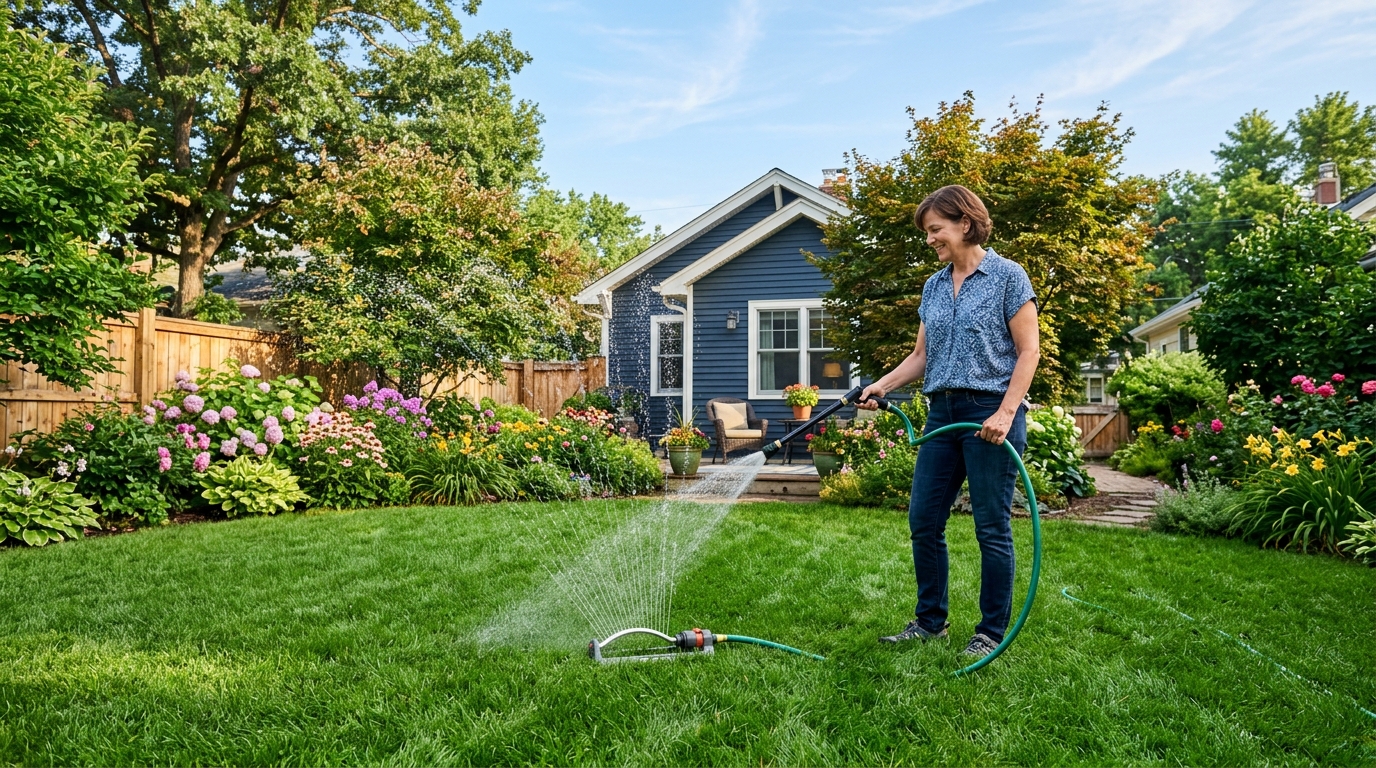
There’s no shortage of watering tools on the market, but finding budget- friendly options that are also efficient is key. Regular hoses and sprinklers can waste water due to evaporation and runoff, so consider investing in a drip irrigation system or soaker hoses. These tools are designed to deliver water directly to the root zone, ensuring your plants receive the moisture they need without unnecessary expenditure on water.
Additionally, look for adjustable sprinklers that allow you to control the flow and coverage. This way, you can target specific areas of your garden, reducing waste and keeping your costs down.
DIY Solutions
If you’re looking to save even more, consider DIY watering solutions. For instance, repurposing plastic containers can create effective drip irrigation systems. Simply poke holes in the bottom of a container, bury it near your plants, and fill it with water. This method allows water to seep slowly into the soil, directly reaching the roots.
Such simple adaptations can keep your garden hydrated without a hit to your budget. Plus, it’s a great way to recycle materials you already have at home!
Seasonal Watering Schedules
Creating a Watering Calendar
Having a structured watering schedule can streamline your efforts and help you manage your water usage effectively. Consider creating a watering calendar that corresponds with Minnesota’s typical summer weather patterns.
For instance, during particularly dry weeks, you might increase watering frequency, while in periods of rain, you can scale back significantly.
A simple rule of thumb is to provide about one inch of water per week, including rainfall. By keeping track of rainfall and adjusting your schedule accordingly, you can ensure your plants are getting just the right amount of moisture they need to thrive.
Adjusting Watering as Seasons Change
As the weather changes, so should your watering practices. In the early summer, you may need to water more frequently, but as temperatures drop or rain becomes more consistent in late summer, you should reduce your watering. Observing your plants and their health will also guide you in adjusting your watering habits.
Remember, over-watering can be just as detrimental as under-watering, leading to root rot and other issues. Being mindful of weather conditions helps ensure your plants remain healthy and resilient.
Community Resources and Support
Local Gardening Groups
Connecting with local gardening clubs or online forums can provide invaluable resources and support. These communities often share tips, experiences, and even plants that can contribute to a healthier garden. Whether it’s through local gardening clubs or online platforms, you can find a wealth of knowledge from fellow gardeners who understand the unique challenges of Minnesota gardening.
Water Conservation Programs
Many local initiatives focus on promoting water conservation. Programs that offer rebates for water-saving devices can help offset the costs of investing in more efficient watering systems. Check with your local water authority or visit websites like the Minnesota Department of Natural Resources for more information on available programs.
What This Means for Your Property
Adopting smart, budget-friendly watering techniques can transform your garden, ensuring its health and vibrancy even during Minnesota’s dry summers. By focusing on deep-root strategies and using efficient watering tools, you’ll save money and contribute to sustainable gardening practices.