As a seasoned lawn care professional here in Minnesota, I’ve seen firsthand what a harsh winter can do to an unprepared yard. The deep freezes, heavy snow, and biting winds can take a serious toll, leaving your lawn looking stressed and damaged come springtime.
But here’s the good news: with a little proactive effort now, you can set your lawn up for success, ensuring it not only survives the winter but emerges healthier and more vibrant when the snow finally melts.
Proper fall lawn care is not just about tidying up; it’s a critical investment in your lawn’s future. This guide will walk you through the essential steps you need to take to get your lawn ready for lawn winterization and a strong return next season.
Fall Lawn Cleanup: Clearing the Way for Health
One of the most fundamental, yet often overlooked, aspects of fall lawn care is a thorough cleanup. This isn’t just about aesthetics; it’s about preventing a breeding ground for pests and diseases that can weaken your turf over the winter.
Leaves, in particular, are a major culprit. When they accumulate and mat down on your lawn, they block sunlight, suffocate the grass blades, and trap moisture. This damp, dark environment is an ideal incubator for fungal diseases, most notably snow mold prevention, which can leave unsightly patches across your yard.
When it comes to dealing with fallen leaves, consistency is key. Aim to rake them up regularly throughout the fall, rather than waiting for a single massive cleanup. This makes the job more manageable and ensures your lawn isn’t buried for extended periods.
Don’t forget to clear away other debris like fallen twigs, branches, and spent annuals. These items can not only smother grass but also harbor insects and rodents that might decide your lawn is a cozy winter home. A clean lawn is a healthy lawn, and this simple step is the foundation for successful lawn winterization.
Fertilizing Your Lawn: Feeding for Resilience
Fall fertilization is arguably the most important feeding your lawn will receive all year. While spring feeding gets a lot of attention, the nutrients applied in the fall are crucial for promoting deep root growth and helping the grass store energy reserves.
These stored carbohydrates are vital for helping the grass survive the stresses of winter, recover quickly in the spring, and resist diseases. It essentially allows the grass to go into its dormant lawn state with a strong foundation, ready to rebound when conditions improve.
When selecting a lawn fertilizer for the fall, look for one that is higher in potassium. Potassium plays a significant role in a plant’s overall health, improving its ability to withstand stress, including cold temperatures and drought.
Avoid fertilizers with high levels of nitrogen at this stage. While nitrogen promotes lush top growth, applying too much late in the fall can encourage new, tender growth that is susceptible to winter damage.
A slow-release formula is ideal, providing steady nourishment without forcing rapid, vulnerable growth. Applying this fertilizer evenly, ideally with a spreader, and watering it in well ensures the nutrients reach the root zone and are effectively utilized by the grass before winter truly sets in.
Aerating Your Lawn: Breathing Room for Roots
Over time, foot traffic, mowing, and natural soil processes can lead to soil compaction. This compacted soil makes it difficult for air, water, and nutrients to penetrate down to the grass roots, effectively suffocating the lawn.
Fall aeration is a fantastic way to combat this. By creating small holes or pulling out plugs of soil, you significantly improve the movement of essential elements to the root zone, encouraging deeper root growth and a healthier, more resilient lawn.
The best time to aerate your lawn in Minnesota is typically in the early to mid-fall, while the grass is still actively growing but before the ground freezes. This allows the turf to recover quickly from the process.
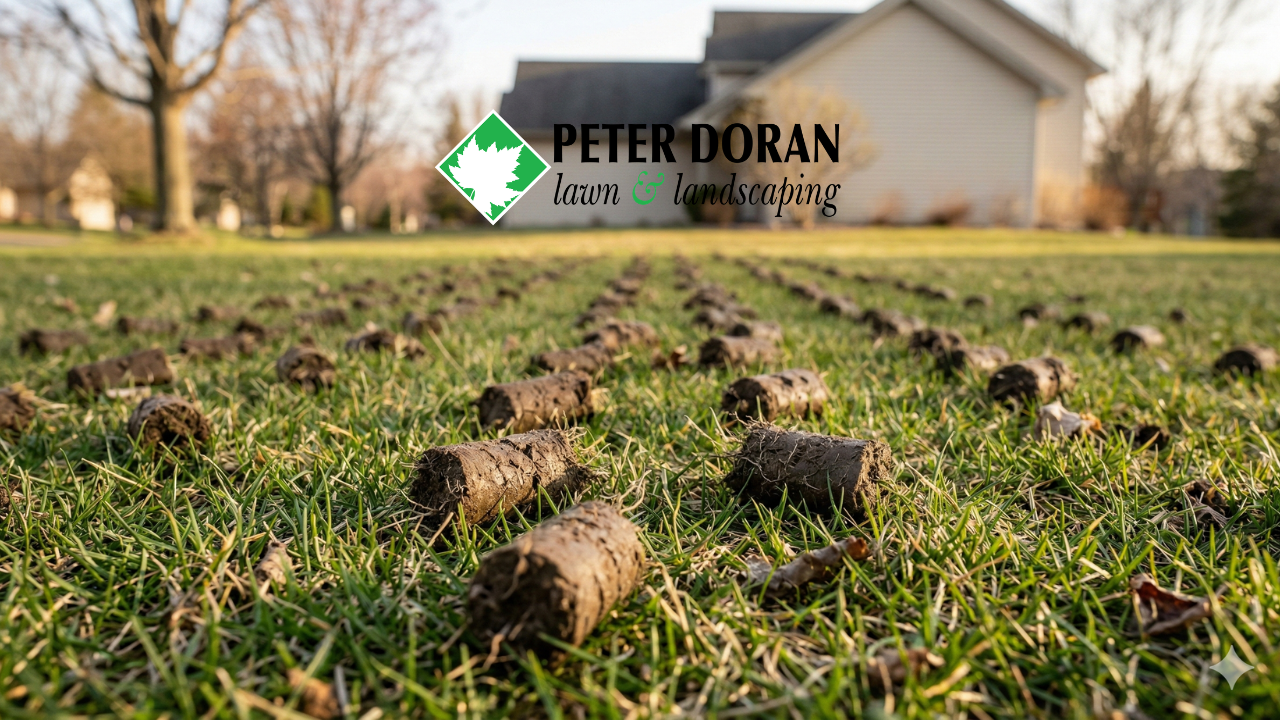
You can use a core aerator, which pulls out soil plugs, or a spike aerator, which punches holes. Core aeration is generally considered more effective as it loosens the soil more thoroughly. After aerating, you’ll notice small soil cores on the surface. Don’t worry about these; they will break down naturally and return valuable nutrients to the soil.
This process is a key component of proactive lawn winterization, ensuring your grass can access what it needs even when the surface is frozen.
Overseeding Your Lawn: Rebuilding for Spring
Fall is also the prime time for overseeding, especially if your lawn has thin patches or bare spots. Overseeding involves spreading grass seed over an existing lawn. This helps to fill in those unsightly gaps, increase the density of your turf, and improve its overall appearance and resilience.
When choosing grass seed for Minnesota, opt for a mix that is well-suited to our climate. Cool-season grasses like Kentucky bluegrass, perennial ryegrass, and fescues are typically your best bet.
Look for varieties that offer good shade tolerance if you have areas with significant tree cover, and prioritize disease resistance to give your lawn an extra layer of protection.
Before you spread the seed, make sure to prepare the soil by lightly raking to loosen any matted grass or thatch and improve seed-to-soil contact. Spread the seed evenly, and then water gently but consistently until the seeds germinate and establish.
This is a fantastic way to ensure your lawn is not just surviving winter but is set up to thrive and look its best come spring.
Watering Your Lawn: The Final Drink Before Winter
Even as the temperatures drop, don’t forget about watering your lawn. This late-season watering is crucial for ensuring your grass has adequate moisture reserves before the ground freezes solid. A well-hydrated lawn is much better equipped to withstand the harsh, dry conditions that winter can bring.
This deep hydration helps prevent desiccation, a process where grass blades lose moisture and turn brown, which can be mistaken for frost damage but is actually dehydration. Proper watering now helps the grass maintain its cellular structure and color throughout the cold months.
When watering in the fall, the goal is to water deeply but infrequently. Aim for about an inch of water per week, allowing the moisture to soak deep into the soil, encouraging deeper root growth.
Avoid frequent, shallow watering, which can lead to weak root systems and is less effective in preparing the lawn for dormancy. Ensure you water early enough in the day so that the grass blades have a chance to dry before nightfall, reducing the risk of fungal diseases, especially as temperatures cool.
This final push of hydration is a vital step in the lawn winterization process, setting the stage for a healthy dormant lawn.
What This Means for Your Property
Taking these steps now; raking leaves, fertilizing, aerating, overseeding, and watering is more than just routine maintenance. It’s a comprehensive strategy for ensuring your lawn’s long-term health and vitality.
By investing this time and effort in fall lawn care, you’re actively preventing future problems like disease outbreaks, weed infestations, and slow spring recovery. You’re building a stronger, more resilient turf that can better withstand the stresses of Minnesota winters.
If you find yourself overwhelmed by these tasks or simply want the assurance of professional execution, services like those offered by Peter Doran Lawn and Landscaping can provide expert help, ensuring your property is perfectly prepped for the changing seasons.