As the vibrant colors of autumn fade and leaves begin to fall, it’s easy to overlook the impact this seasonal change has on your lawn. Many homeowners grapple with concerns about maintaining their lawn’s appearance and health during fall, often unsure how to prevent damage from accumulating leaves.
The key to preserving your lawn’s vitality and aesthetic appeal lies in timely and effective leaf removal. This isn’t just about tidiness; it’s a crucial step in ensuring your grass thrives year-round. Removing leaves promptly prevents a host of problems, setting the stage for a lush, healthy lawn come spring.
Understanding the Impact of Leaves on Your Lawn
The Dangers of Leaf Accumulation
Piled-up leaves might seem harmless, but they can suffocate your grass, creating a breeding ground for mold and disease. A thick layer of leaves blocks sunlight and airflow, essential elements for healthy turf. This creates a damp, dark environment that invites fungal growth, leading to unsightly patches and potential long-term damage.
Furthermore, leaf litter provides an ideal habitat for pests and insects, such as voles and certain types of grubs, which can further compromise your lawn’s health by feeding on roots and thatch.
Beyond suffocation and disease, accumulated leaves can also attract unwanted critters seeking shelter from the cold. These pests can cause additional damage to your lawn and even find their way into your home. It’s a domino effect that starts with something as simple as neglecting leaf removal.
Nutrient Deficiency and Lawn Health
Fallen leaves not only block sunlight and air but also hinder the grass’s ability to absorb essential nutrients. As leaves decompose, they can create an impenetrable barrier that prevents water and fertilizers from reaching the soil.
This can lead to nutrient depletion, weakening the grass and making it more susceptible to disease and weed infestations. Prolonged leaf coverage can also alter the soil’s pH balance, further impacting its ability to support healthy grass growth.
Moreover, the decomposition process itself consumes nitrogen, a vital nutrient for lawn health. As the leaves break down, they draw nitrogen from the soil, depriving the grass of this essential element. This can result in a thin, weak lawn that struggles to recover in the spring.
Best Practices for Leaf Removal
Timing Your Leaf Removal
The timing of leaf removal is critical. Waiting too long can lead to significant damage, while starting too early might mean repeated efforts. Ideally, begin removing leaves as soon as you notice a significant accumulation on your lawn. Don’t wait until all the leaves have fallen; regular, smaller cleanups are more effective than one massive effort.
The frequency of leaf removal depends on your local climate and the types of trees in your yard. In areas with heavy leaf fall, you might need to check for accumulation weekly.
As a general guideline, aim to remove leaves before they form a thick, matted layer. This prevents suffocation and allows sunlight and air to reach the grass. Keep an eye on the weather forecast, as rain or snow can compact the leaves, making them harder to remove.
Techniques for Effective Leaf Removal
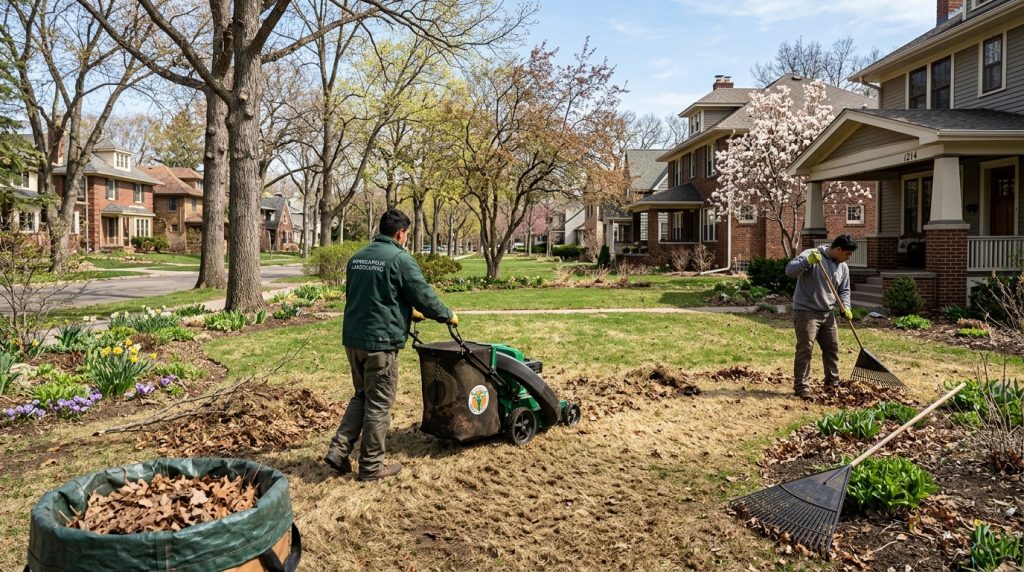
There are several methods for removing leaves, each with its pros and cons. Raking is a traditional method that’s effective for small to medium-sized lawns. However, it can be labor-intensive and time-consuming.
Mulching involves using a lawnmower to chop the leaves into small pieces, which then decompose and enrich the soil. This method is efficient and environmentally friendly but requires a mulching mower.
Leaf blowers are a fast and efficient option for clearing large areas, but they can be noisy and disruptive.
When choosing a method, consider the size of your lawn, the volume of leaves, and your personal preferences. Raking is a good choice for smaller areas and those who prefer a quiet, low-impact approach. Mulching is ideal for those who want to recycle leaves and improve soil health. Leaf blowers are best suited for large lawns and those who need to clear leaves quickly.
Regardless of the method you choose, be sure to remove all leaves from the lawn to prevent damage and promote healthy growth. Peter Doran Lawn and Landscaping can advise on the best approach for your specific needs.
Leaf Removal Tools and Equipment
Essential Tools for Homeowners
Effective leaf removal requires the right tools. A sturdy rake with flexible tines is essential for gathering leaves without damaging the grass. A tarp can be used to collect and transport leaves, making disposal easier.
A leaf blower can quickly clear large areas, but choose a model with adjustable speed to avoid damaging delicate plants.
For mulching, a mulching mower is a must-have. Other helpful tools include gloves, eye protection, and a wheelbarrow for hauling leaves.
When choosing tools, consider the size of your lawn and the volume of leaves you typically deal with. A wide rake is more efficient for large areas, while a smaller rake is better for tight spaces. A powerful leaf blower is necessary for heavy leaf fall, while a less powerful model is sufficient for lighter accumulations.
Invest in quality tools that will last for years and make leaf removal easier and more efficient. Proper maintenance of your tools, such as cleaning and sharpening, will also extend their lifespan.
Professional Leaf Removal Services
While DIY leaf removal is a viable option for many homeowners, there are times when hiring professionals is the better choice. If you have a large property, limited time, or physical limitations, professional leaf removal services can save you time and effort.
Lawn care services have the equipment and expertise to remove leaves quickly and efficiently, ensuring your lawn is protected from damage. They can also handle disposal, which can be a challenge for some homeowners.
The cost of professional leaf removal varies depending on the size of your lawn and the volume of leaves. However, many homeowners find that the convenience and peace of mind are worth the investment.
When comparing DIY versus professional services, consider the time and effort involved, the cost of equipment, and the potential for damage to your lawn. Professional services can also provide additional lawn care services, such as fertilization and aeration, to further enhance your lawn’s health.
Environmental Considerations in Leaf Removal
Composting vs. Disposal
Instead of throwing away leaves, consider composting them. Composting is an environmentally friendly way to recycle leaves and create a valuable soil amendment for your garden.
Decomposed leaves, known as leaf mold, are rich in nutrients and can improve soil structure, water retention, and drainage. Composting reduces waste and provides a sustainable way to nourish your lawn and garden.
To compost leaves effectively, create a compost pile in a designated area of your yard. Layer leaves with other organic materials, such as grass clippings and kitchen scraps. Keep the pile moist and turn it regularly to aerate it.
Over time, the leaves will decompose into a dark, crumbly material that can be used as a soil amendment. Composting is a simple and rewarding way to reduce waste and improve the health of your lawn and garden.
Eco-Friendly Leaf Removal Options
In addition to composting, there are other eco-friendly leaf removal options to consider. Many communities offer leaf recycling programs, where leaves are collected and composted on a large scale. Check with your local municipality to see if such programs are available in your area.
Another option is to use leaves as mulch around trees and shrubs. Mulching with leaves helps retain moisture, suppress weeds, and protect plant roots from extreme temperatures.
When removing leaves, avoid using gas-powered leaf blowers, which can be noisy and polluting. Opt for electric leaf blowers or rakes instead. When disposing of leaves, avoid plastic bags, which contribute to landfill waste. Use paper bags or compostable bags instead.
By choosing eco-friendly leaf removal options, you can reduce your environmental impact and promote sustainable lawn care practices. Peter Doran Lawn and Landscaping is committed to eco-friendly practices and can advise on sustainable leaf removal options.
Maintaining Lawn Health Beyond Leaf Removal
Post-Leaf Removal Care
Leaf removal is just one step in maintaining a healthy lawn. After removing leaves, it’s essential to provide additional care to prepare your lawn for winter and spring growth. Aeration, overseeding, and fertilization are all important steps to consider.
Aerating your lawn in the fall helps alleviate soil compaction and allows water and nutrients to reach the roots more effectively.
Overseeding ensures a dense, healthy lawn that can better withstand winter stress.
Fertilizing provides the nutrients your lawn needs to recover from summer stress and prepare for winter dormancy.
By providing post-leaf removal care, you can ensure your lawn remains healthy and vibrant throughout the year.
Seasonal Lawn Care Routine
Integrating leaf removal into a broader seasonal lawn care routine is essential for long-term lawn health and visual appeal. A comprehensive lawn care routine includes regular mowing, watering, fertilization, and weed control. Each season presents unique challenges and opportunities for lawn care.
In the spring, focus on promoting new growth and controlling weeds.
In the summer, focus on maintaining adequate moisture and preventing heat stress.
In the fall, focus on leaf removal and preparing your lawn for winter dormancy.
In the winter, focus on protecting your lawn from snow and ice damage.
By following a seasonal lawn care routine, you can ensure your lawn remains healthy and attractive year-round. Regular maintenance prevents problems before they arise and promotes a strong, resilient lawn that can withstand environmental stressors.
What This Means for Your Property
In summary, timely leaf removal is not just about aesthetics; it’s a critical component of maintaining a healthy, vibrant lawn.
By understanding the impact of leaves on your lawn, adopting best practices for leaf removal, considering environmental factors, and integrating leaf removal into a broader seasonal lawn care routine, you can ensure your grass thrives year-round.
A proactive approach to leaf removal prevents suffocation, disease, and pest infestations, setting the stage for a lush, healthy lawn come spring. Contact Peter Doran Lawn and Landscaping today for a free consultation on leaf removal and seasonal lawn maintenance!