- (763) 595-1440
- info@peterdoranlawn.com
- 14360 James Rd, Rogers, MN

5 Signs Your Minneapolis Lawn Needs Spring Dethatching
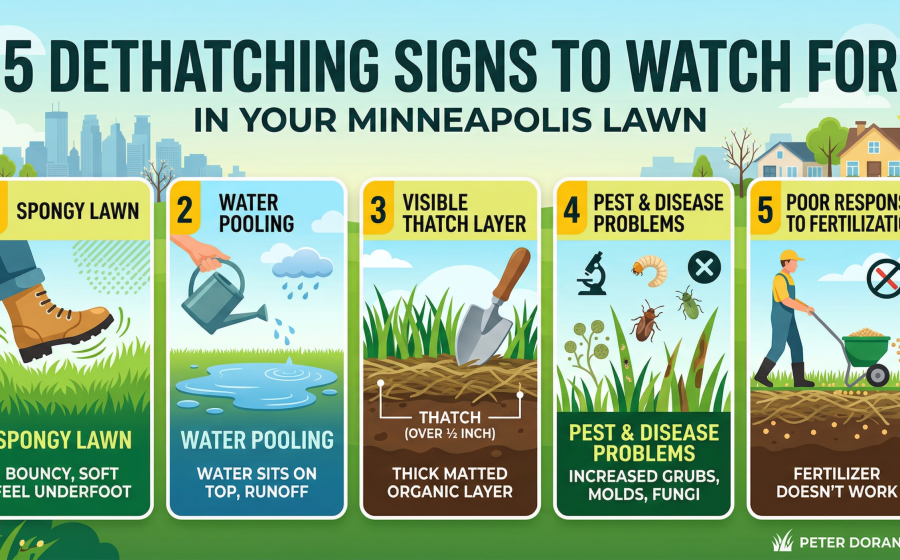
5 Dethatching Signs to Watch For In Your Minneapolis Lawn
Is your Minneapolis lawn looking a little worse for wear after a long winter? You might be seeing the early signs of thatch buildup, which can suffocate your grass and prevent it from thriving. Recognizing these lawn dethatching signs is the first step toward restoring your lawn\’s health and vitality this spring. Let\’s explore what to look for and how to address the issue.
Is Your Minneapolis Lawn Suffocating? Understanding Thatch Buildup
Thatch is a layer of dead organic matter including dead grass, roots, and stems that accumulates between the green grass blades and the soil surface. A thin layer of thatch (less than ½ inch) can actually be beneficial, acting as a mulch that helps retain moisture and regulate soil temperature. However, when thatch builds up excessively, it becomes a barrier that prevents essential nutrients, water, and air from reaching the soil and grass roots.
The Minneapolis climate, with its heavy snowfall and freeze/thaw cycles, can exacerbate thatch buildup. Snow cover can trap moisture and create a humid environment that encourages the growth of thatch-forming organisms. The repeated freezing and thawing can also damage grass plants, contributing to the accumulation of dead organic matter.
Furthermore, the heavy clay soil common in Minneapolis can hinder the natural decomposition of thatch. Clay soil is poorly aerated and drains slowly, which creates an anaerobic environment that is not conducive to the breakdown of organic matter. This combination of factors makes Minneapolis lawns particularly susceptible to thatch problems, making it important to watch for lawn dethatching signs.
5 Tell-Tale Signs Your Minneapolis Lawn Needs Dethatching This Spring
If you suspect your lawn might be suffering from excessive thatch, here are five key signs to look for this spring.
Sign #1: Spongy Lawn
One of the first lawn dethatching signs is a spongy or bouncy feel when you walk across your lawn. This occurs because the thick layer of thatch acts like a mattress, compressing under your weight. A healthy lawn should feel firm and solid underfoot, not soft and yielding.
Sign #2: Water Pooling
If you notice water pooling on your lawn\’s surface after rain or watering, it\’s a strong indication that thatch is preventing water from penetrating the soil. The dense thatch layer acts as a barrier, causing water to run off instead of soaking in and reaching the grass roots. This can lead to drought stress and weakened grass plants.
Sign #3: Visible Thatch Layer
The most direct way to determine if you need to dethatch is to examine the thatch layer itself. Use a trowel or spade to dig up a small wedge of your lawn. Measure the thickness of the brown, matted layer between the green grass blades and the soil. If the thatch layer is thicker than ½ inch, it\’s time to consider dethatching.
Sign #4: Pest and Disease Problems
A thick layer of thatch creates a favorable environment for certain pests and diseases to thrive. Grubs, chinch bugs, and fungal diseases like brown patch and snow mold can all flourish in the moist, sheltered conditions provided by excessive thatch. If you\’re noticing an increase in pest activity or disease outbreaks, dethatching can help improve air circulation and reduce the severity of these problems.
Sign #5: Poor Response to Fertilization
If you\’re fertilizing your lawn regularly but not seeing the desired results, thatch may be to blame. The thatch layer can act as a barrier, preventing fertilizer from reaching the soil and grass roots. Instead, the fertilizer sits on top of the thatch, where it can be broken down by microorganisms or washed away by rain, providing little benefit to the grass plants.
Dethatching vs. Aeration: What\’s the Difference, and Which Does Your Lawn Need?
Dethatching and aeration are two common lawn care practices that are often confused, but they address different problems. Dethatching involves removing the layer of dead organic matter (thatch) that accumulates on the soil surface. Aeration, on the other hand, involves creating small holes in the soil to improve air and water penetration.
Dethatching is the right choice when you have a thick layer of thatch that is preventing water, nutrients, and air from reaching the soil. Aeration is a better option when you have compacted soil that is hindering root growth and water drainage. Compacted soil is common in areas with heavy foot traffic or clay-rich soil.
In some cases, both dethatching and aeration may be necessary to improve lawn health. It\’s generally best to dethatch before aerating, as removing the thatch layer will allow the aeration equipment to penetrate the soil more effectively. The benefits of aerating your lawn include improved root growth, better water infiltration, and increased nutrient uptake.
DIY Dethatching vs. Professional Lawn Care in Minneapolis: Which is Right for You?
Homeowners in Minneapolis have two options when it comes to dethatching: doing it themselves or hiring a professional lawn care service. DIY dethatching can be a cost-effective option for small lawns with mild thatch problems. The tools needed include a thatching rake (for manual dethatching) or a power rake (for larger areas). The costs can range from $30 for a thatching rake to several hundred dollars for a power rake.
However, DIY dethatching also carries the risk of damaging your lawn if done incorrectly. Aggressive raking or improper use of a power rake can tear up healthy grass plants and create bare spots. Professional dethatching services, like those offered by Lawn Care Companies Minneapolis, use specialized equipment such as vertical mowers and core aerators that are more effective and less damaging than DIY methods.
Peter Doran Lawn takes a careful and methodical approach to dethatching, assessing the specific needs of each lawn and using the appropriate equipment and techniques to ensure a safe and effective process. While the cost of professional dethatching may be higher than DIY, the benefits include reduced risk of damage, more thorough thatch removal, and expert advice on post-dethatching care. The exact cost difference depends on the size of your lawn and the severity of the thatch problem.
After Dethatching: Preparing Your Lawn for a Healthy Spring
After dethatching, it\’s important to remove the loosened thatch from your lawn. This can be done with a rake or a lawn mower with a bagging attachment. Removing the thatch will prevent it from re-accumulating and hindering new growth.
Overseeding after dethatching is highly recommended, especially in areas where the thatch was particularly thick or where bare spots have developed. Choose a grass seed blend that is well-suited to the Minneapolis climate, such as a mix of Kentucky bluegrass, perennial ryegrass, and fine fescues. A starter fertilizer can also help promote new growth.
Watering your lawn regularly after dethatching is crucial for helping the grass recover and establish new roots. Aim to water deeply and infrequently, providing enough moisture to keep the soil consistently moist but not waterlogged. With proper care, your lawn will quickly bounce back and thrive.
Ready for a Lush, Healthy Lawn This Spring? Get Your Spring Yard Cleanup Started!
If you\’ve noticed any of the lawn dethatching signs mentioned above, it\’s time to take action and address the problem. Proper dethatching is essential for a healthy, vibrant lawn, allowing water, nutrients, and air to reach the soil and grass roots.
Spring yard cleanup services, including dethatching, can help homeowners achieve a beautiful lawn by removing dead organic matter, promoting new growth, and preparing the lawn for the growing season. These services ensure your lawn gets the best start to the season.
Ready to get your lawn in top shape for spring? Learn more about Peter Doran Lawn\’s spring yard cleanup services and schedule your appointment.
Frequently Asked Questions
What does a lawn that needs dethatching actually look like? What specific visual signs do you check for?
Beyond the spongy feel, a lawn needing dethatching often has a brown, matted appearance at the base of the grass blades. You might also see stunted grass growth, even with regular watering and fertilization. Visually inspecting the thatch layer by digging up a small section is the most definitive way to confirm if dethatching is needed.
What are the best dethatching tools for a small Minneapolis lawn?
For a small Minneapolis lawn, a thatching rake is often sufficient for removing light to moderate thatch. These rakes have curved, sharp tines designed to lift and remove dead organic matter. For more significant thatch buildup, a power rake or vertical mower might be necessary, but these are typically better suited for larger lawns.
What are the common mistakes people make when dethatching their lawn?
One common mistake is dethatching too aggressively, which can damage healthy grass plants. Another mistake is dethatching at the wrong time of year, such as during the heat of summer, which can stress the lawn. Failing to remove the loosened thatch after dethatching is also a common error that prevents new growth.
What are the benefits of aerating your lawn?
Aeration improves soil drainage, reduces soil compaction, and allows air, water, and nutrients to reach the grass roots more easily. This leads to stronger root growth, healthier grass, and improved overall lawn health. Aeration is especially beneficial for lawns with heavy clay soil or those that experience heavy foot traffic.
How soon after dethatching should you start watering your lawn?
You should start watering your lawn immediately after dethatching to help the grass recover and establish new roots. Water deeply and infrequently, providing enough moisture to keep the soil consistently moist but not waterlogged. Avoid frequent, shallow watering, which can encourage shallow root growth.
What difference do you typically see in a lawn 4-6 weeks after dethatching and overseeding?
After 4-6 weeks, you should see a noticeable improvement in the density and color of your lawn. The new grass seedlings will have emerged and begun to fill in any bare spots, creating a thicker, more uniform turf. The lawn should also be more responsive to watering and fertilization.
Recognizing the signs of thatch buildup is crucial for maintaining a healthy and vibrant lawn in Minneapolis. Addressing thatch problems promptly through dethatching can significantly improve your lawn\’s ability to absorb water, nutrients, and air, leading to stronger, more resilient grass.
At Peter Doran Lawn, we understand the unique challenges that Minneapolis lawns face, and we\’re committed to providing expert Dethatching Services in Minneapolis that deliver exceptional results. Our experienced team can assess your lawn\’s specific needs and recommend the best course of action to restore its health and beauty.
See the signs of thatch? Let us provide a free lawn assessment and recommend the best course of action. Contact us today!
Recent Comments