- (763) 595-1440
- info@peterdoranlawn.com
- 14360 James Rd, Rogers, MN

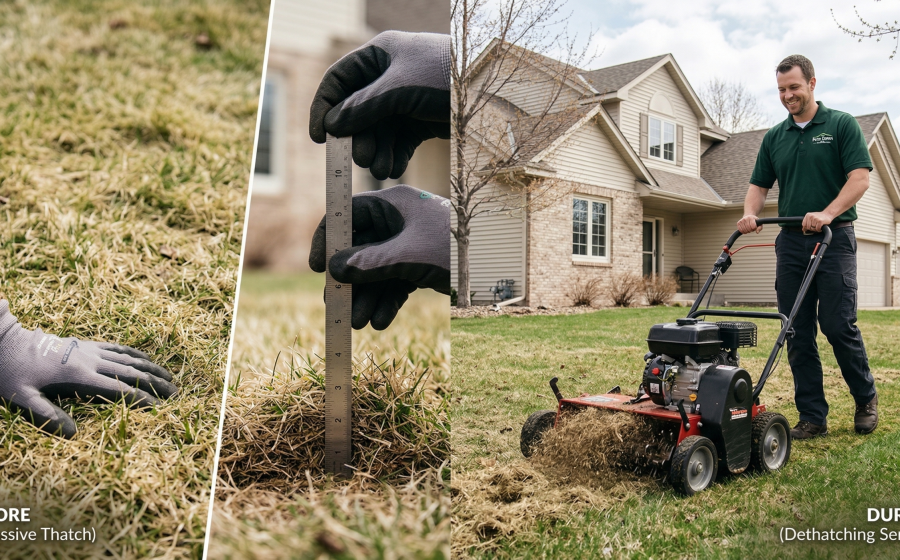
Dethatching 101: Is Your Minneapolis Lawn Ready for Spring?
Is Dethatching Right for Your Minneapolis Lawn?
As spring arrives in Minneapolis, homeowners turn their attention to their lawns, eager to see them thrive after a long winter. One common issue that can prevent a lawn from reaching its full potential is thatch buildup. Dethatching the lawn is the process of removing this layer of dead organic material, and understanding whether your lawn needs it is the first step toward a healthier, greener yard.
Thatch is a layer of dead and living organic matter that accumulates between the green grass blades and the soil surface. In Minneapolis, our cool-season grasses and distinct seasonal changes can contribute to thatch accumulation. This layer, if excessive, prevents water, air, and nutrients from reaching the soil and grass roots, hindering healthy growth.
Spring is often the ideal time for dethatching in Minneapolis because the grass is actively growing and can recover quickly from the process. Removing the thatch layer at this time allows the lawn to take full advantage of the spring growing season, leading to a lush and vibrant lawn throughout the summer.
5 Signs Your Minneapolis Lawn Needs Dethatching
Identifying whether your lawn has excessive thatch buildup is crucial for determining if dethatching is necessary. Several telltale signs can indicate that your Minneapolis lawn needs dethatching service to restore its health and vitality.
One of the most noticeable signs is a spongy feel underfoot. A healthy lawn should feel firm, but excessive thatch creates a soft, bouncy surface. This sponginess indicates that the thatch layer is thick enough to cushion your steps, preventing you from feeling the solid ground beneath.
Poor water penetration is another key indicator. To test this, water a small area of your lawn and observe how quickly the water soaks into the soil. If the water pools on the surface or takes a long time to absorb, the thatch layer is likely preventing it from reaching the roots.
Increased pest and disease problems can also signal a thatch issue. Thatch provides a breeding ground for various lawn pests and diseases, such as fungal infections like snow mold and insect infestations. These problems are more likely to occur and persist in lawns with thick thatch layers.
Thin or patchy grass growth is a common symptom of excessive thatch. The thatch layer can inhibit new grass growth by blocking sunlight and preventing seedlings from reaching the soil. This results in a lawn that looks sparse and uneven.
Finally, a visible thatch layer thicker than half an inch is a clear sign that dethatching is needed. Examine the base of your grass plants near the soil surface. If you see a dense, brown layer of dead and decaying material that exceeds this thickness, it\’s time to consider dethatching your lawn.
The Benefits of Dethatching Your Lawn
Dethatching offers numerous benefits for your lawn\’s health and appearance. By removing the barrier of dead organic matter, you create an environment that promotes vigorous growth and resilience.
Improved air and water circulation is a primary benefit. Dethatching allows air and water to penetrate the soil more easily, reaching the grass roots and promoting healthy root development. This improved circulation also helps prevent soil compaction and encourages beneficial microbial activity.
Enhanced nutrient absorption is another significant advantage. Removing the thatch layer allows fertilizers and other soil amendments to reach the roots directly, maximizing their effectiveness. This results in a lawn that can better utilize the nutrients it needs to thrive.
Dethatching also reduces the risk of lawn diseases. By removing the moist, dense environment that thatch provides, you make it less hospitable for disease-causing pathogens. This helps prevent common lawn diseases and keeps your grass healthy and vibrant.
Ultimately, dethatching promotes thicker, healthier grass growth. By removing the barrier to air, water, and nutrients, you create an optimal environment for new grass to emerge and existing grass to flourish. While aeration can help with soil compaction, it doesn\’t remove the thatch layer itself, making dethatching a more direct solution for thatch-related problems.
Dethatching Tools: Which is Right for Your Lawn?
Choosing the right dethatching tool depends on the size of your lawn and the severity of the thatch buildup. Several options are available, each with its own advantages and disadvantages.
A dethatching rake is a manual tool with curved, sharp tines designed to pull thatch from the lawn. This tool is best suited for small lawns with light thatch buildup. While it requires more physical effort, it offers precise control and is a cost-effective option for minor thatch issues.
A power rake, also known as a dethatcher, is a motorized machine that uses rotating tines to lift and remove thatch. Power rakes are more efficient than manual rakes and are suitable for medium-sized lawns with moderate thatch buildup. However, they can be aggressive and may damage healthy grass if not used carefully.
A vertical mower, or dethatching machine, is a heavy-duty machine with vertical blades that slice through the thatch layer and pull it to the surface. This tool is necessary for large lawns with severe thatch buildup. Vertical mowers are the most effective option for removing thick thatch layers, but they can also be the most damaging to the lawn if used improperly.
Rotary mowers with dethatching attachments are another option. These attachments typically consist of spring-loaded tines that attach to the mower deck and help lift thatch as you mow. While convenient, these attachments are generally less effective than dedicated dethatching tools and are best suited for light thatch removal.
For homeowners in the Minneapolis area who prefer not to purchase dethatching equipment, rental options are readily available at many local hardware stores and rental centers. When renting a unit, be sure to inspect it for any damage or wear and tear, and ask for instructions on how to use it properly. Choose a machine that is appropriately sized for your lawn and the amount of thatch you need to remove.
How to Dethatch Your Lawn: A Step-by-Step Guide
Dethatching your lawn requires careful execution to avoid damaging the grass. Follow these steps for effective and safe dethatching.
First, mow the lawn to a height of about 2 inches. Mowing before dethatching helps the dethatching tool reach the thatch layer more effectively and reduces the amount of grass clippings mixed in with the removed thatch.
Next, set the dethatching tool to the correct depth. The goal is to remove the thatch layer without damaging the healthy grass. Start with a shallow setting and gradually increase the depth until the tool is effectively removing thatch without digging into the soil. A good starting point is about ¼ to ½ inch.
Dethatch the lawn in multiple passes, using a consistent pattern. Make one pass in one direction, then make a second pass perpendicular to the first. This cross-hatching pattern ensures thorough thatch removal. Overlap each pass slightly to avoid leaving any areas untouched.
After dethatching, rake up and remove the thatch. Use a leaf rake or thatching rake to gather the loose thatch and dispose of it properly. You can compost the thatch or bag it for disposal with your regular yard waste.
Common mistakes homeowners make when dethatching include setting the dethatching tool too deep, dethatching during the wrong time of year, and failing to properly prepare the lawn beforehand. To avoid these mistakes, always start with a shallow setting, dethatch during the active growing season, and mow the lawn before dethatching. Taking these precautions will help ensure a successful dethatching experience.
After Dethatching: What to Do Next
The steps you take after dethatching are crucial for ensuring your lawn recovers quickly and thrives. Proper post-dethatching care will help your lawn bounce back stronger than ever.
Begin by raking up any remaining debris. Even after the initial cleanup, some loose thatch may remain on the lawn surface. Removing this debris ensures that new grass seedlings have direct contact with the soil.
Overseed the lawn with a high-quality grass seed blend suitable for Minneapolis lawns. Kentucky bluegrass, fine fescues, and perennial ryegrass are all good choices. Overseeding helps fill in any bare spots created by dethatching and promotes a thicker, more uniform lawn.
Fertilize the lawn with a starter fertilizer that is high in phosphorus. Phosphorus promotes root development, which is essential for new grass seedlings. Follow the instructions on the fertilizer bag for proper application rates.
Water the lawn thoroughly and frequently after dethatching. Keep the soil consistently moist, but not waterlogged, until the new grass seedlings have established. Aim to water deeply and infrequently, rather than shallowly and frequently.
Signs of successful dethatching and recovery include new grass growth, improved water penetration, and a reduction in spongy feel. Over time, your lawn should become thicker, greener, and more resistant to pests and diseases.
Maintaining a Healthy Lawn: Peter Doran Lawn Care Services
Regular lawn maintenance is key to preventing excessive thatch buildup and maintaining a healthy lawn. Proper mowing, fertilization, and watering practices can help minimize thatch accumulation and promote vigorous grass growth.
At Peter Doran Lawn, we offer a comprehensive range of lawn care services to keep your lawn healthy and beautiful. In addition to dethatching, our services include lawn mowing, fertilization, weed control, and aeration. These services are designed to address all aspects of lawn health and ensure that your lawn looks its best year-round.
Choosing a local lawn care provider like Peter Doran Lawn ensures that your lawn receives the specific care it needs to thrive in the Minneapolis climate. We understand the unique challenges of maintaining lawns in this region and can provide customized solutions to address your needs.
Frequently Asked Questions
What are the signs of lawn diseases that can be exacerbated by thatch?
Thatch creates a moist, dense environment that favors fungal growth, leading to diseases like brown patch, dollar spot, and snow mold. These diseases often manifest as discolored patches, lesions on grass blades, or a cottony growth on the lawn surface. Addressing thatch buildup is crucial in preventing and managing these lawn diseases.
How do you adjust your dethatching technique for different types of grass (e.g., Kentucky bluegrass vs. fescue)?
Different grass types have varying tolerances to dethatching. Kentucky bluegrass, being a more aggressive spreader, can generally withstand more aggressive dethatching. Fescues, on the other hand, are more sensitive and require a gentler approach. Adjusting the depth and intensity of dethatching based on the grass type is essential to avoid damaging the lawn.
How often do you need to dethatch your lawn in Minneapolis?
How often you dethatch your lawn in Minneapolis depends on several factors, including the type of grass, soil conditions, and maintenance practices. Generally, most lawns benefit from dethatching every one to three years. However, if you notice signs of excessive thatch buildup, such as a spongy feel or poor water penetration, it may be necessary to dethatch more frequently.
Can I dethatch my lawn by myself?
Dethatching can be done yourself, but it requires the right tools and knowledge to do it effectively and safely. If you have a small lawn with light thatch buildup, you may be able to dethatch it manually with a dethatching rake. However, for larger lawns or more severe thatch problems, it\’s best to hire a professional dethatching service to ensure the job is done correctly.
When is the best time to dethatch my lawn in Minneapolis?
The best time of year to dethatch your lawn in Minneapolis is typically in the spring or early fall, when the grass is actively growing. Avoid dethatching during the heat of summer or when the grass is dormant, as this can stress the lawn and slow its recovery.
What are the signs of lawn diseases that can be exacerbated by thatch?
Thatch creates a moist, dense environment that favors fungal growth, leading to diseases like brown patch, dollar spot, and snow mold. These diseases often manifest as discolored patches, lesions on grass blades, or a cottony growth on the lawn surface. Addressing thatch buildup is crucial in preventing and managing these lawn diseases.
Dethatching is a vital practice for maintaining a healthy lawn in Minneapolis, removing the barrier that prevents essential nutrients from reaching the soil and promoting vigorous grass growth. By recognizing the signs of thatch buildup and understanding the proper dethatching techniques, homeowners can take proactive steps to ensure their lawns thrive.
While dethatching can be a DIY project, achieving optimal results often requires professional expertise. At Peter Doran Lawn, we have years of experience providing dethatching services tailored to the specific needs of Minneapolis lawns. Our team uses professional-grade equipment and proven techniques to remove thatch effectively and safely, ensuring your lawn recovers quickly and looks its best.
Recent Comments