- (763) 595-1440
- info@peterdoranlawn.com
- 14360 James Rd, Rogers, MN

Fall Dethatching: Thicker Corcoran Lawns
As summer fades, many Corcoran homeowners notice their lawns struggling, often due to excessive thatch. This dense layer of organic debris accumulates between grass blades and the soil. Addressing this requires professional dethatching lawn services in Corcoran, MN, especially in fall. This is a fundamental step in preparing your lawn for the harsh Minnesota winter, ensuring its resilience and promoting a robust, healthy resurgence in spring.
Why Fall Dethatching is Crucial for Corcoran Lawns
Thatch consists of dead grass leaves, stems, and roots that accumulate faster than they can decompose, forming a matted layer that can suffocate your lawn. While a thin layer (under half an inch) offers some benefits like insulation and moisture retention, an excessive buildup acts as a barrier, preventing essential nutrients, water, and air from reaching the soil and grass roots.
For lawns in Minnesota’s climate, fall presents the optimal window for dethatching. The cooler temperatures and increased moisture levels minimize stress on the grass, allowing it to recover effectively before winter dormancy sets in. Dethatching during this period ensures the lawn has ample time to heal and establish stronger roots, which is critical for surviving the freezing temperatures and snow cover.
Excessive thatch in Corcoran lawns specifically contributes to several detrimental issues, including increased susceptibility to fungal diseases like snow mold, which thrives in matted, moist conditions. It also impedes water penetration, leading to shallow root growth and making the lawn more vulnerable to drought stress despite adequate rainfall. By removing this suffocating layer, dethatching significantly improves the lawn’s ability to absorb vital resources, strengthening it against winter damage and promoting a much more vigorous and disease-resistant spring comeback.
Signs Your Corcoran Lawn Needs Dethatching
Distinguishing between a healthy and an unhealthy thatch layer is crucial for Corcoran homeowners assessing their lawn’s needs. A healthy thatch layer feels slightly springy underfoot and measures less than half an inch thick, allowing for proper air and water exchange. Conversely, an unhealthy, excessive thatch layer will feel noticeably spongy and soft, often exceeding an inch in thickness, indicating a barrier that is actively harming your turf.
Visual cues are often the first indicators that your lawn requires attention. You might observe water pooling on the surface rather than soaking in, even after light rain or irrigation, suggesting poor absorption. Patches of thinning grass, despite consistent care, or an increase in pest activity like insects and grubs, which find shelter within the dense thatch, also signal a problem.
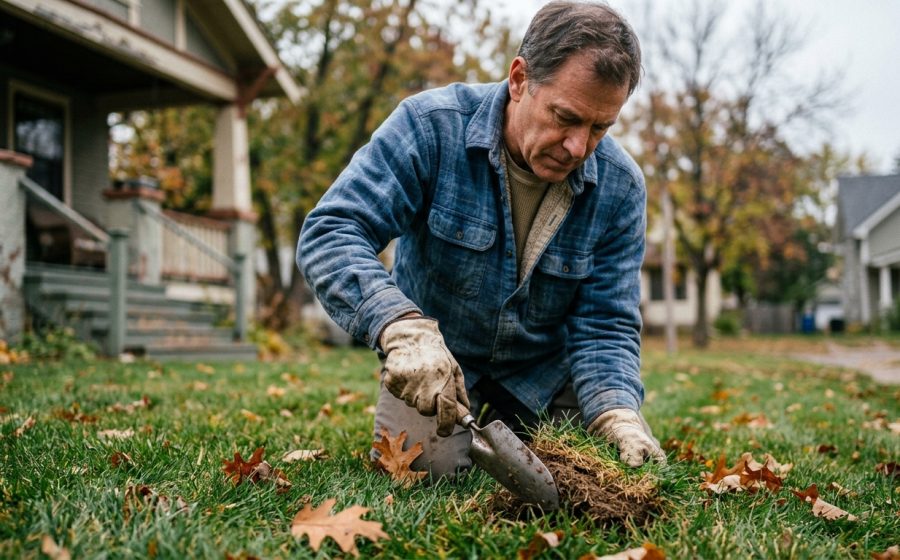
To perform a simple ‘thatch test,’ take a small trowel and dig into an inconspicuous area of your lawn, lifting a small section of turf. Carefully examine the profile between the green blades and the soil surface; if the matted, brownish layer of organic material measures more than half an inch, your lawn would greatly benefit from dethatching services. This visual inspection provides a clear indication of the underlying issue.
Many homeowners mistakenly believe that a spongy lawn is simply well-cushioned, or that thinning grass is solely due to nutrient deficiencies, leading them to delay essential dethatching services. These misconceptions prevent timely intervention, allowing thatch to continue hindering nutrient uptake and increasing the lawn’s vulnerability to disease and environmental stressors. Recognizing these specific signs and understanding the detrimental effects of excessive thatch is the first step toward restoring your Corcoran lawn’s vitality.
The Dethatching Process: What to Expect in Corcoran
Professional dethatching employs specialized equipment to effectively remove the dense thatch layer without damaging the healthy turf beneath. The two primary methods are power raking and vertical mowing, each suited for different thatch densities and grass types common in Corcoran. Power raking utilizes rotating tines to gently lift and pull out lighter thatch layers, while vertical mowing, or verticutting, employs vertical blades that slice into the thatch and soil, effectively removing thicker, more stubborn accumulations and often preparing the ground for overseeding.
Before any dethatching begins, proper preparation of the lawn is essential to maximize effectiveness and minimize stress. This typically involves mowing the lawn to a slightly lower height than usual, which exposes more of the thatch layer to the equipment. Additionally, ensuring optimal soil moisture levels is critical; the ground should be moist enough to allow the equipment to penetrate effectively but not so wet that it becomes muddy, which can lead to tearing of the turf or compaction.
During the actual dethatching process, our experienced technicians use commercial-grade equipment calibrated precisely for your lawn’s specific conditions. The machine is systematically guided across the lawn, with the tines or blades working to dislodge and bring the thatch to the surface. Once the dethatching is complete, the significant amount of removed debris is thoroughly raked up and removed from your property, leaving a clean surface ready for recovery.
Post-dethatching care is paramount for the lawn’s rapid recovery and robust growth in the Corcoran area. Immediate and consistent watering helps the exposed soil and roots absorb moisture more efficiently. Overseeding is often recommended directly after dethatching, as the loosened soil provides an ideal bed for new grass seeds to germinate and establish, leading to a thicker, more resilient lawn. Applying a starter fertilizer can further support the growth of new seedlings and the recovery of existing turf.
Immediately after dethatching, your lawn will likely appear somewhat sparse and stressed, with visible rows where the thatch was removed. This is a normal and temporary condition, as the process is inherently disruptive. With proper post-dethatching care, including consistent watering and fertilization, the lawn typically begins to green up and fill in within a few weeks. The full benefits, including improved density and color, usually become apparent by the following spring, showcasing a significantly healthier and more vibrant turf.
DIY vs. Professional Dethatching in Corcoran, MN
For Corcoran homeowners considering dethatching, the choice between a do-it-yourself approach and hiring professionals involves weighing various factors beyond just the initial cost. DIY dethatching often comes with hidden expenses, including the rental of suitable equipment, which can be surprisingly costly, along with the time commitment for pickup, operation, and return. Furthermore, the significant volume of thatch debris generated requires proper disposal, which can incur additional fees or considerable effort.
Consumer-grade dethatchers, readily available at hardware stores, are frequently insufficient for the dense thatch layers often found in Corcoran’s established lawns and specific soil conditions. These machines often lack the power and precision of professional equipment, leading to incomplete thatch removal or, worse, superficial scratching of the turf without addressing the core problem. This can result in wasted effort and a lawn that remains unhealthy.
Local professionals, like our team at Peter Doran Lawn, bring invaluable expertise to lawn care services in Corcoran, MN. We understand the specific soil conditions, common grass types, and climate realities unique to the northern Twin Cities suburbs. This local knowledge allows us to accurately assess thatch density, select the most appropriate equipment and technique, and calibrate it precisely for optimal results. Our experience ensures proper timing, which is crucial for the lawn’s recovery, and we provide tailored post-care advice to support healthy regrowth.
Improper dethatching carries several risks, including damaging healthy grass roots, creating bare spots, or even compacting the soil if done incorrectly or with the wrong equipment. Professionals mitigate these risks through their extensive training and the use of commercial-grade machinery that is regularly maintained and calibrated. We ensure the process is performed efficiently and effectively, protecting your investment and promoting long-term lawn health. Professional dethatching also integrates seamlessly into a broader fall lawn care strategy for a lawn care, ensuring all aspects of turf health are addressed comprehensively.
Beyond Dethatching: Comprehensive Fall Lawn Care for Corcoran
Dethatching is a foundational step in fall lawn care, but its benefits are amplified when combined with aeration and fertilization. Aeration creates small holes in the soil, alleviating compaction and improving penetration of air, water, and nutrients to the root zone. When performed after dethatching, these processes work synergistically for optimal root development and turf health.
Professional lawn fertilization services in fall are crucial for winter hardiness and a vibrant spring. A slow-release, balanced fertilizer applied in autumn strengthens grass roots, allowing them to store energy for dormancy. This deep feeding helps the lawn withstand winter stresses, reduces disease, and ensures a quicker, greener emergence in spring.
After dethatching, several next steps ensure a truly vibrant lawn next spring. Overseeding is highly recommended to fill sparse areas and introduce new, resilient grass varieties. Consistent watering, especially if rainfall is scarce, is vital for seed germination and turf recovery. Additionally, maintaining a proper mowing height throughout the fall helps the grass build energy reserves for winter.
Frequently Asked Questions
How much does dethatching cost in Corcoran, MN?
The cost of dethatching services in Corcoran, MN, varies based on lawn size and thatch density. Professional services provide a quote after an on-site assessment. Investing in professional dethatching often proves more cost-effective in the long run.
What is the difference between dethatching and power raking?
Dethatching is the general term for removing thatch, while power raking is a specific method. Power raking uses rotating tines to gently lift lighter thatch layers (up to half an inch). For denser thatch, vertical mowing uses vertical blades to slice deeper, providing more aggressive removal.
How often should I dethatch my lawn?
Dethatching frequency depends on your lawn’s specific conditions, including grass type and soil composition. Most Corcoran lawns benefit from dethatching every one to three years, or when the thatch layer exceeds half an inch. Regular monitoring helps determine the optimal schedule.
When is the best time of year to dethatch my lawn in Minnesota?
For Minnesota lawns, the best time to dethatch is typically early fall, from late August through September. This timing allows grass to recover before winter dormancy, benefiting from cooler temperatures and increased moisture. Spring dethatching can also be effective, but fall offers a longer recovery period.
What are the optimal soil moisture levels for dethatching in Corcoran?
Optimal soil moisture is crucial for effective dethatching in Corcoran. The soil should be moist enough for equipment penetration without tearing turf. This usually means watering thoroughly a day or two before service, allowing the surface to dry slightly while the subsoil remains hydrated.
What specific grass types common in Corcoran respond best to fall dethatching?
Cool-season grasses, predominant in Corcoran, respond exceptionally well to fall dethatching. This includes Kentucky Bluegrass, Tall Fescue, and Perennial Ryegrass, which can develop significant thatch layers. Fall dethatching provides ideal conditions for their recovery and robust root development before winter.
Understanding the critical role of fall dethatching is essential for any Corcoran homeowner aiming for a truly healthy and resilient lawn. This vital process removes the suffocating layer of thatch, allowing your turf to breathe, absorb nutrients, and prepare for the harsh winter months ahead.
At Peter Doran Lawn, we possess unrivaled local expertise, understanding the specific soil conditions and climate realities unique to the northern Twin Cities suburbs. Our dependable quality service, delivered by an experienced staff, ensures that your lawn receives the precise care it needs to thrive. We use only the best products available and stand by our workmanship 100%.
To ensure your lawn is properly prepared for winter and set for a vibrant spring, contact us today to schedule your professional dethatching service.
Recent Comments